• Skip to primary navigation
  • Skip to main content
  • Skip to footer

O'Grady Psychology Associates

Psychotherapy, Marriage Counseling, Neuropsychological Assessment

  • Home
  • Services
    • Therapy for Adults
    • Therapy for Children and Teens
    • Couples Counseling
      • The Gottman Relationship Checkup
    • Neuropsychological Assessment
    • Mindfulness-based Interventions
    • Special Assessments
    • Help Your Child Sleep Alone
    • For Professionals
      • For Physicians and Health Professionals
      • For Attorneys & Insurance Professionals
  • About Us
    • David O’Grady, Ph.D., ABPP
    • Susan J. O’Grady, Ph.D.
      • Policies – Dr. Susan O’Grady
  • Resources
    • Helpful Forms
    • FAQs
    • Articles and Links
  • Susan’s Blog
    • Relationships
    • Mindfulness and Meditation
    • Wellbeing and Growth
    • Psychotherapy
    • Depression and Anxiety
  • Contact Us

Archives for May 2013

May 4, 2013 By Susan O'Grady 1 Comment

How Mindfulness Can Reduce Stress

Mindfulness-Based Stress Reduction

DSC_0231 2 In 1979, Dr. Jon Kabat-Zinn founded the Stress Reduction Clinic at the University of Massachusetts Medical School—the oldest academic medical center-based stress reduction program in the west. In response to inquiries about the clinic’s eight-week course, Dr. Kabat-Zinn wrote Full Catastrophe Living (1990), a the seminal book on mindfulness practice that has spawned numerous offspring, including mindfulness-based cognitive therapy (MBCT), dialectical behavior therapy (DBT), and acceptance and commitment therapy (ACT.) Mindfulness practices have made their way into schools, prisons, business, hospitals, and health clubs. Psychologists and researchers have explored combining cognitive therapy and mindfulness to help depression, anxiety, and medical problems. Given the ubiquitousness of the practice, it is important to understand what it is, and what it is not.

I have always considered the title of Dr. Kabat-Zinn’s book unfortunate. The title suggests that life is catastrophic, but the book is really about living well with the ordinary stresses of life. In his introduction, Dr. Kabat-Zinn tells the reader why he choose the title:

I keep coming back to one line from the movie of Nikos Kazantzakis’ novel Zorba the Greek. Zorba’s young companion turns to him and inquires, “Zorba, have you ever been married?” to which Zorba replies, “Am I not a man? Of course I’ve been married. Wife, house, kids, everything…. the full catastrophe!”

But despite Zorba’s responsibilities and multiple roles, he lived his life with gusto, very much in the moment. “’Just now I’m thinking of the chicken and the pilaff sprinkled with cinnamon,’” he tells the narrator. “’Everything in good time. In front of us now is the pilaff; let our minds become pilaff. Tomorrow the lignite will be in front of us; our minds must become lignite! No half-measures, you know.” Whether considering the pleasurable dinner or the difficult work, Zorba gave his mind to what was in front of him, never just being a spectator of his life.

We all have stress. As Michael Baime, director of the Penn Program for Mindfulness at the University of Pennsylvania Health System, put it recently:

“Stress doesn’t go away, ever. That’s why we call it stress management rather than stress elimination…in practicing mindfulness you create a world where you experience depth, meaning and connectedness. You see joy and sadness more fully and settle more deeply into an authentic way of being.”

Learning to Live With Stress

There are no avoiding daily hassles, relationship conflict, money worries, and health concerns. Yet by living side by side with our stress, we come to know ourselves more deeply. In mindfulness practice we learn to sit with uncomfortable feelings in a non-judgmental way and thereby develop the ability to tolerate the difficulties of life with more equanimity. The practice of observing our thoughts without getting wrapped up in them gives us the ability to bring insight to thoughts, feelings, and perceptions. By bringing our focus back to our breathing each time we notice our minds wandering, we learn to stop ruminating and obsessing, which will eventually help in reducing symptoms of anxiety and depression.

Filed Under: Depression & Anxiety, Dr. Susan O'Grady's Blog, Health Psychology, Mindfulness & Meditation, Psychotherapy, Well-being & Growth Tagged With: Mindfulness-Based Stress Reduction, Stress, stress-reduction

May 3, 2013 By Susan O'Grady Leave a Comment

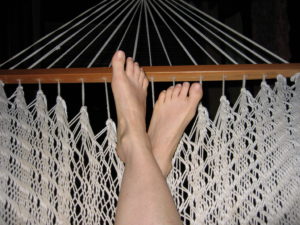
Powering off to reboot your internal drive

When your iPad or smartphone is having issues—unresponsive, randomly crashing, or just running sluggishly—it’s time to power off and reboot the system. When do you power off so that you can reboot your drive?

Irritability, Fatigue, Lack of Enthusiasm?  Time to Power Off

When you are having issues such as irritability, fatigue, or lack of enthusiasm, it’s time to power off. In a previous post, I mentioned that relaxation is one of the eight therapeutic lifestyle changes that help people cope with depression, anxiety, and sleep problems. Taking time to relax is often the last thing on a long to-do list for most people. And being last on the list, it’s often neglected. People might think they’re powering off by surfing the web, watching TV, attending to email, or having a bowl of ice cream while talking to a friend on the phone. These things will give you a break but won’t provide the restorative stillness we need to feel replenished.

When you reset your iPad by shutting it down, the apps that have been causing problems are cleared, giving a new start—a clean slate that will clear up the system so it can function the way it’s designed to. You, too, can reboot your internal drive by practicing deep relaxation. Listen to the audio at the end of this post to taste a few minutes of relaxation.

Ten Minute Lying Down Meditation

Filed Under: Depression & Anxiety, Dr. Susan O'Grady's Blog, Health Psychology, Mindfulness & Meditation, Psychotherapy, Susan's Musings, Uncategorized, Well-being & Growth Tagged With: Health, Relaxation, Stress

May 2, 2013 By Susan O'Grady 3 Comments

The Benefits of Practicing Mindfulness in Nature

The Benefits of Practicing Mindfulness in Nature


Research has consistently shown that time spent in nature helps people cope with depression and anxiety. Combined with other self-care activities, it can be as effective in treating psychological problems as anti-depressants.

But too often we run from activity to another and then finally, plop down on the worn sofa—unaware that these moments in nature are always available to us. In the park by the office, or in our own backyard, we can rest, listening to the buzz of sound all around. When we slow down enough to see the canvas of nature, we can experience contentment akin to one-ness with the natural world.

In mindfulness-based cognitive therapy and stress reduction, we ask participants to practice meditation daily, both formally and informally. Formal practice includes sitting or laying down and focusing on the breath, or on sounds– the intent is to be still and focused. Informal practice can be doing any routine activity mindfully. As the old saying has it, “Chop wood, carry water.” Some days we can eat a meal mindfully, without watching TV or reading the paper, just chewing and noticing the senses of smell, color, taste, and texture. Mindfulness can mean sitting in the garden and being attentive to the sounds of insects and the rustle of the breeze and doing nothing but sitting. (The Japanese Buddhist word for mindfulness practice, “zazen,” simply means “seated meditation.”)
Beginning a formal meditation practice can be daunting because of our innate resistance to sitting still with no distraction but paying attention to your breathing. In some meditation practices, the instruction will be to focus attention on a word, or to count to ten and start over. There are many ways to be still and it is important to try different kinds of meditation to find a practice that best suits you. When I teach Mindfulness-based stress reduction groups, participants will gravitate to one form of meditation over another. Each person is different. Some find mindfulness of sights and sound to be more effective, while others will focus on their breathing. In these classes, we practice many different ways to meditate and each participant is encouraged to find one they think they can continue to work with after the group ends.

Mindfulness Meditation: Informal Practice in Nature

But informal practice is always available and readily accessible to most of us: no special cushions, meditation rooms, or fancy teacher required. In fact, giving yourself permission to just do one thing, with presence, is a great way to slow down. If you can find some time each day to be mindful, especially in the natural world, that will go a long way in helping ease the symptoms of depression. Go outside and sit in your garden or the local park and be with nature. Even just a few minutes of watching the birds, weeding or pruning the roses will help boost your mood.

Berman, M. G., Jonides, J., & Kaplan, S. (2008). The cognitive benefits of interacting with nature. Psychological Science, 19, 1207–1212.
Hofmann, S. G., Sawyer, A. T., Witt, A. A., & Oh, D. (2010). The effect of mindfulness-based therapy on anxiety and depression: A meta- analytic review. Journal of Consulting and Clinical Psychology, 78
Maller, C., Townsend, M., Pryor, A., Brown, P., & St Leger, L. (2006). Healthy nature, healthy people: ‘Contact with nature’ as an upstream health promotion intervention for populations. Health Promotion Inter- national, 21, 45–54.

Filed Under: Depression & Anxiety, Dr. Susan O'Grady's Blog, Health Psychology, Mindfulness & Meditation Tagged With: Anxiety, Depression, Meditation, Mindfulness

May 1, 2013 By Susan O'Grady 2 Comments

Do Opposites Attract? How what once attracted us can begin to repel

We Seek Wholeness in Ourselves When we Choose our Mate

The adage “opposites attract” is often true before marriage and well into the first few years of a relationship. However, as I have seen in many years of providing marriage counseling, the powerful attraction that once drew you to your mate can fade over time. If personality differences are misunderstood, then the initial attraction will turn to ”opposites repel,” leading to negative feelings for the person you were deeply drawn to when dating.

 Using the Myers-Briggs Type Inventory in Couples Counseling

I sometimes have my couple clients take a True-False test called the Myers-Briggs Type Indicator (MBTI), a questionnaire based on the work of Carl Jung that assesses different psychological types according to four pairs of preferences: extraversion vs. introversion, sensing vs. intuition, thinking vs. feeling, and judging vs. perception. We all use all four functions, but some are more dominant than others.

The MBTI is used by, for example, vocational counselors to help people select occupations that best suit their temperaments. It has also been widely used by employers and managers to appreciate differences in workers with the aim of functioning better in teams, thus avoiding misunderstanding and increasing efficiency by reducing personality conflicts.

Decision making in marriage can be challenging when partners are opposite on some personality traits. When I was ready to buy my new car I decided what I wanted, test drove it and did some quick online research to see what the inventory was, and at what price. I went to our local dealership and was quoted a price that seemed fair. I was prepared to purchase the car then and there, but since we believe that big purchases should always be discussed and agreed on, I took my decision to my partner for the final green light. He immediately jumped into the decision-making by polling every dealer within 100 miles of us and reading every consumer report written on the car.

My psychological preference is Feeling and my husband is Thinking. Both approaches have to do with decision making, and each is valid. Feeling types seek harmony with people. Thinking types seek objective clarity. Because I felt that the car salesman was honest and nice, I trusted his price quote. I didn’t want there to be discomfort or tension.

When all was said and done, he came to me with the exact price I was quoted, saying it was a good price, giving his approval. Because we respected each other’s differences, we came to an agreement.

When Jeff and Lynn came to marriage therapy they were stuck in gridlock about how to spend time in their retirement. Jeff wanted to spend time at home, tinkering with projects in the garage and watching old home movies—something he wasn’t able to do when he worked six days a week. Jeff is a typical Introvert, someone who needs alone time to recharge his batteries and who is drained by too much socializing. Lynn, in contrast, was bored with staying home and wanted to travel and see the many sights that they hadn’t had time or money for before retirement. Lynn is an Extrovert, someone who gains energy from social contact and feels drained without it. These differences made even smaller decisions difficult for Lynn and Jeff. For instance, Lynn wanted to entertain friends and loved putting on big dinner parties, but that made Jeff uncomfortable. He much preferred to have one couple over and play Pictionary. Lynn was furious at Jeff for what she considered to be thwarting her dreams. Jeff felt overwhelmed and withdrew from her when their discussions turned to these issues.

We seek what we want to complete us when we choose a mate. This is largely unconscious. When Jeff first met Lynn he was mesmerized by her vitality and adventurous spirit. He loved how she could talk to anyone. He was invigorated by her constant energy. Lynn was in love with Jeff’s calm and his ability to love the simple things in life. They were attracted to the very traits that were undeveloped in themselves.

Life transitions such as retirement often bring out differences in how a couple will make decisions. When life is routine, these personality difference can be dealt with, even masked. But with challenges such as the birth of a child or a move, the traits that you loved in your partner become the very things that drive you crazy.

The MBTI is a valuable test to help couples understand why they sometimes fight about the same things over and over again. I like it because unlike many psychological tests, the MBTI is non-pathologizing. There are no good or bad traits. Every one of the sixteen types indicates a difference in how one gathers information, organizes their life, how they like to spend their time, and how they think (or feel) through the various decisions that confront them.

After giving Jeff and Lynn the MBTI I was able to help them understand Jeff’s introversion and Lynn’s extroversion. Neither of them was wrong; they just needed to understand and appreciate their differences. We worked with ways they could get their individual needs met, and still find things to do together in retirement. They began to keep a list of activities they each wanted to do and then found ways to compromise about how to going about doing them together, honoring each other’s interests and dreams. This was immensely reassuring. Once you realize that your partner is not wrong, or odd, you can start talking compromise.

Despite my husband and I having opposite types for Feeling and Thinking, we can come to the exact same decision, as with buying the car, but we do it differently. Understanding each other saves a lot of time in the long run!

Filed Under: Couples & Marriage & Family, Dr. Susan O'Grady's Blog, Psychotherapy, Relationships Tagged With: Conflict in Marriage, Couples, Do opposites attract, Love

  • « Go to Previous Page
  • Page 1
  • Page 2

Dr. Susan J. O’Grady is a Certified Gottman Couples Therapist

Learn more about marriage counseling and couples therapy »
Learn more about the Gottman Relationship Checkup »

Connect with Dr. Susan on Social Media

  • Instagram
  • LinkedIn
  • YouTube

Dr. David O’Grady is a Board-Certified Neuropsychologist

Learn more about medical-legal examinations Learn more about neuropsychological testing Learn more about services for professionals

Join Our Email List

We will NEVER share your personal information with anyone, period.

Privacy Policy

Our Privacy Policies Have Been Updated

Copyright © 2026 · Dr. David D. O'Grady and Dr. Susan J. O'Grady